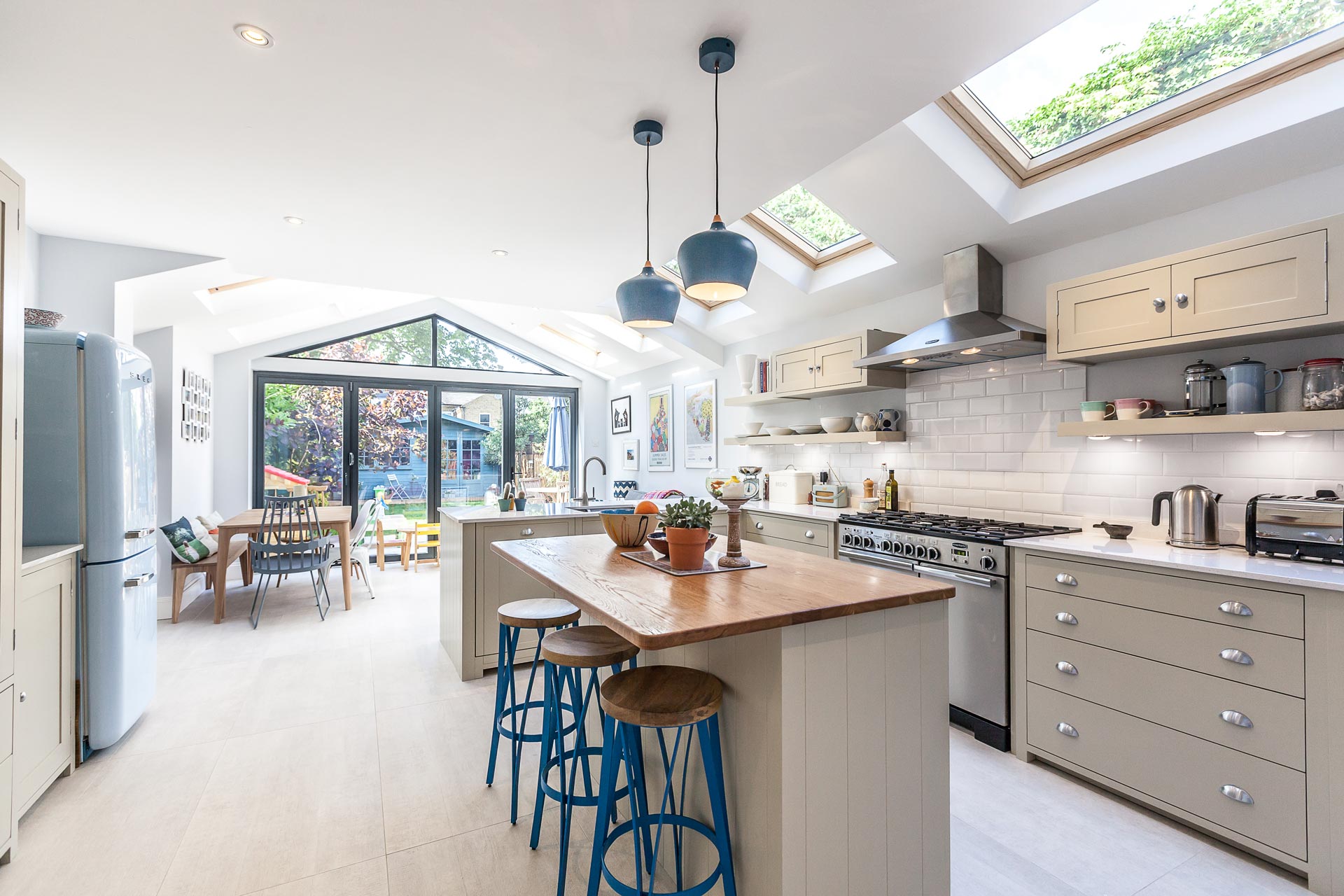



In this age of open-plan living kitchens and living rooms are being combined together. If you’re embarking on a similar project consider enhancing your living space and adding some extra value by blurring the borders between your kitchen and the garden with our clever design tips!
EMBRACE AN OPEN-PLAN SCHEME THAT INCORPORATES THE GARDEN
Get rid of those small kitchen windows and a thick and heavy back door. Adding expanses of glazing, bi-folding or sliding door, cleverly placed roof glazing, incorporating natural materials and carefully landscaping the garden to draw the eye to outside will help to create a well connected indoor-outdoor living filled with plenty of natural light and an easily accessible outdoor that feels like the extension of your living-room.
THINK OF THE VIEW
The view itself will be crucial when the time comes to sell. Magnificent views and large uninterrupted glazed surfaces will not only let more natural light in but also create a stunning architectural feature – so consider your dining and food prep area. Where will the cook stand? How will it enhance your lifestyle, dining experience? How will the eye wander through each of these zones?
When it comes to designing a garden imagine it to be an open-plan room – the extension of your home. Consider the layouts and creating a clear walkway between the kitchen and your patio area – handy when entertaining!
CHOOSE YOUR GLAZING
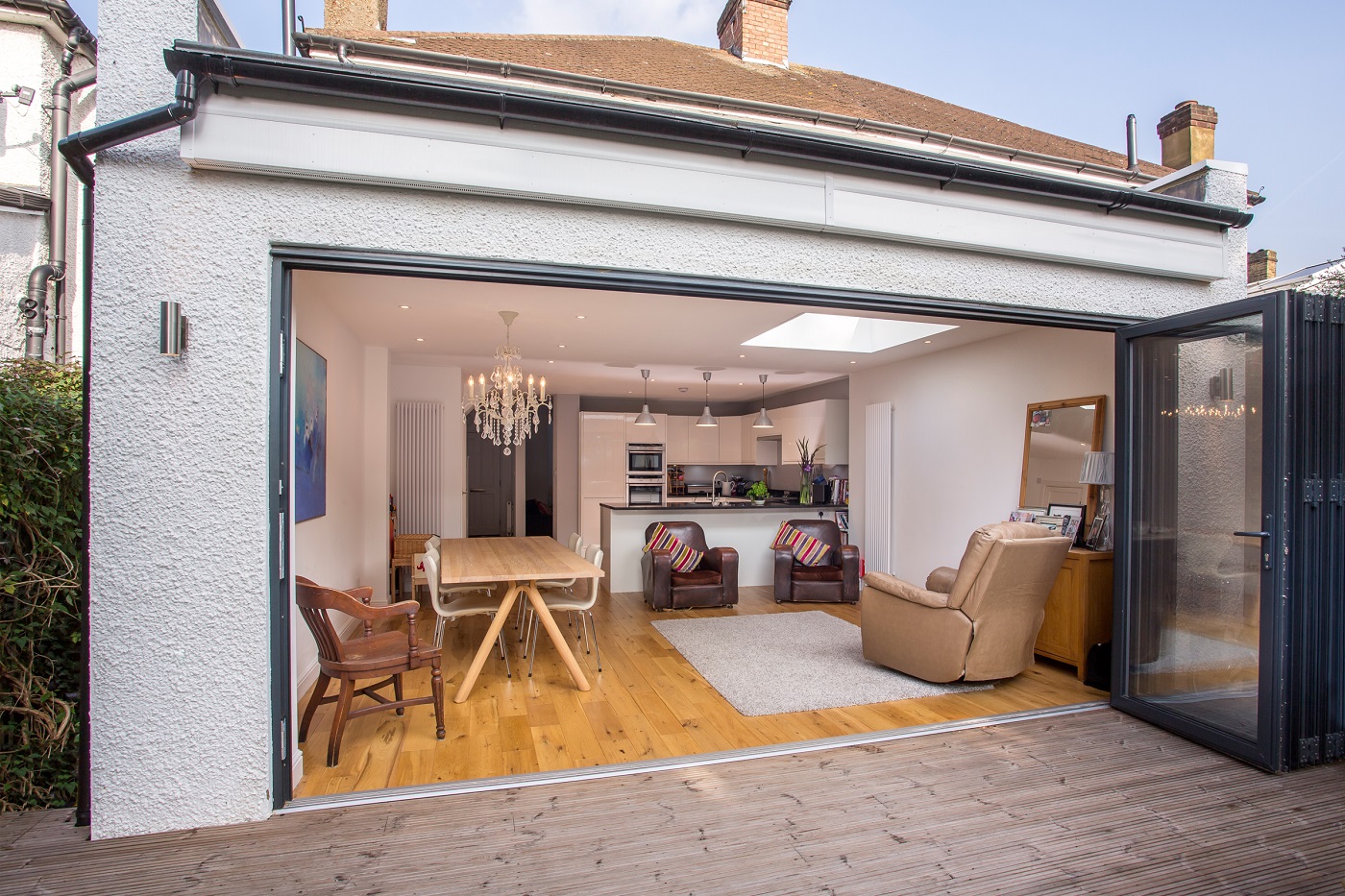
Large bi-folding or sliding door, oversized picture windows and clever use of skylights brings in the extra sunlight, provides stunning views and opens up your living space. When it comes to glazing the less frame – the better. All depends on your aperture, clever architectural designs and your imagination. It’s worth to push the boundaries and invest in quality solutions that deliver on providing the most of natural light and functionality. A stunning full length glazed wall can help breathe new life into your home and increase the value of your property.
 So think of the way they fit your lifestyle, as sliding and lift and slide systems are often more practical and easier in operation that bulky bifolds. Going for large sliding doors, or even larger lift and slide, you can minimise the amount of door panels and at the same time frames, and create magnificent floor-to-ceiling panoramic views.
If sliding or bi-folding door are not the way to go forward – don’t forget you can always opt in for a large picture window, where frames merge with the facade of the building and you have no bulky frames that block the sunlight.
If your kitchen is positioned in a single storey extension consider glazed roofs or skylights to draw more natural light in.
MERGE COLOURS AND MATERIALS
Creating a continuous floor that flows from the kitchen into the garden will make the space seem much larger, as if your room continues outside.
Using the same materials in two areas helps to create that look of unified space and blur the borders between them. Think of using large stone or porcelain tiles (with an anti-slip surfaces applied to the outside). Alternatively for the look that draws the eye into a garden – timber decking and wooden flooring. Natural substances, as stone and wood, are perfect for connecting those two spaces and bring some of the outdoors in.
When going for even more unified look try matching your cabinetry and decking or introducing some of the nature’s palette into your interior design deco.
PRACTICALITY
To further the connection between the open-plan interior and the garden you should consider raising the patio area, so it becomes levelled with the kitchen. It’s not only practical because it creates an easy an trip-free access, but helps unite the spaces and draws attention away from the divisions between both areas. So when your doors are opened there is very little distinction between both zones.
If raising the entire patio area is not an option consider creating full width steps leading down to the garden.
OUR TOP TIPS FOR YOU:
1) Access to sunlight is a must when merging both spaces
2) Use the same flooring in the kitchen and patio area – it will help blur the lines.
3) Floor-to-ceiling glazed door give the illusion of added space
4) Incorporate plenty of glazing – roof glazing, large picture windows
5) Go for the flush floor finish for easy and user friendly access
6) Use natural colours and materials to better connect the spaces – mirror outside in inside
7) Light up your garden at night!
Did you find this article helpful? Leave us your comments below and share your feedback with us.
 UNITS WITH AN ODD NUMBER OF STACKING LEAVES: